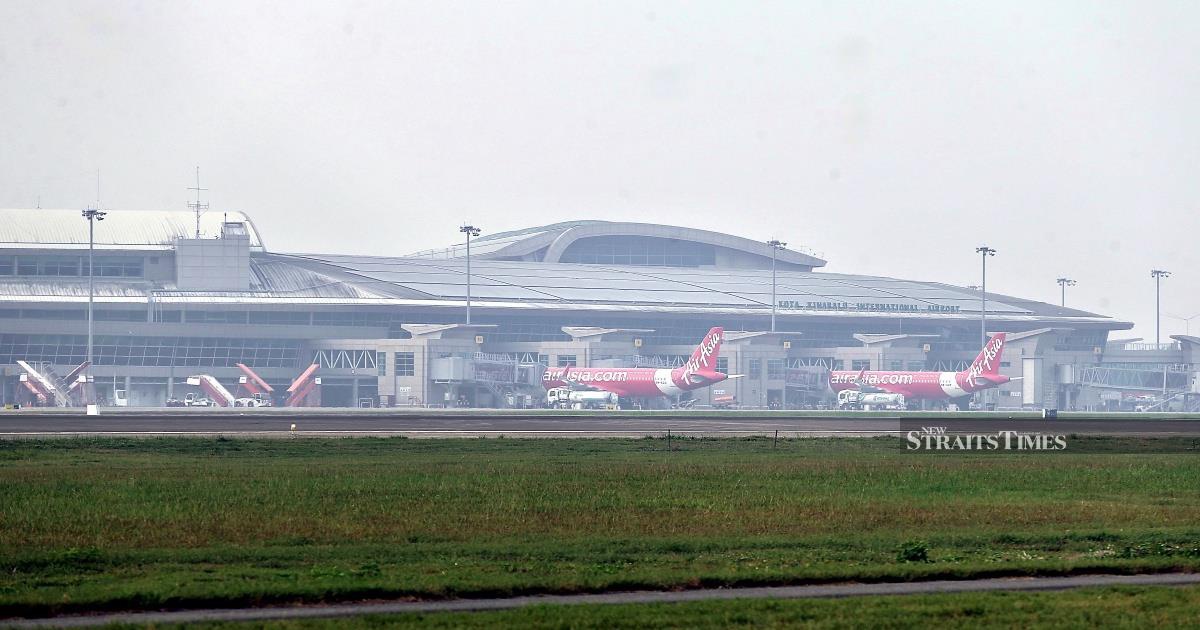

KOTA KINABALU: Sabah should start planning for Kota Kinabalu International Airport’s (KKIA) long-term needs beyond its planned RM442.3 million terminal expansion, a logistics industry representative said.
Sabah Chartered Institute of Logistics and Transport Malaysia Section deputy chairman Mohd Faizal Malik said airport capacity depended on more than the number of passengers terminals could handle.
“Runway capacity, aircraft movements, peak-hour demand, operational reliability and the ability to accommodate future growth must also be considered,” he said in a statement.
He said KKIA, which traces its history to Jesselton Airfield, had served the state capital for more than 45 years. It had undergone several major upgrades, including improvements to Terminals 1 and 2 and a runway extension.
The planned expansion will increase the airport’s annual passenger handling capacity from nine million to 12 million.
Faizal said a larger terminal would not necessarily allow more aircraft to take off and land, as aircraft movements would also depend on runway capacity, parking stands and air traffic management.
He said Sabah needed to assess how much capacity KKIA would have after the expansion, when it might reach its practical limits and what infrastructure would be needed beyond that.
Faizal said planning for a new airport would take time, involving feasibility studies, site assessments, land planning, approvals, financing and supporting infrastructure.
He said the same applied to other options, including a second runway or a relief airport.
At a recent forum titled “The Future of Kota Kinabalu International Airport: Retain, Expand or Relocate?”, airport and aviation strategy consultant Edward Clayton said KKIA handled about nine million passengers in 2025.
He said passenger numbers had grown by an average of 4.1 per cent annually since 2005.
Clayton also said the airport’s overall capacity should be assessed rather than focusing solely on its terminal facilities.
The forum also discussed indicative costs of about RM10 billion for a new airport and between RM10 billion and RM15 billion for a second runway and relief airport.
Sabah’s tourism growth, driven in part by rising arrivals from China and expanding direct air links with major Asian cities, is adding to the demands on its aviation infrastructure.