
Caption:
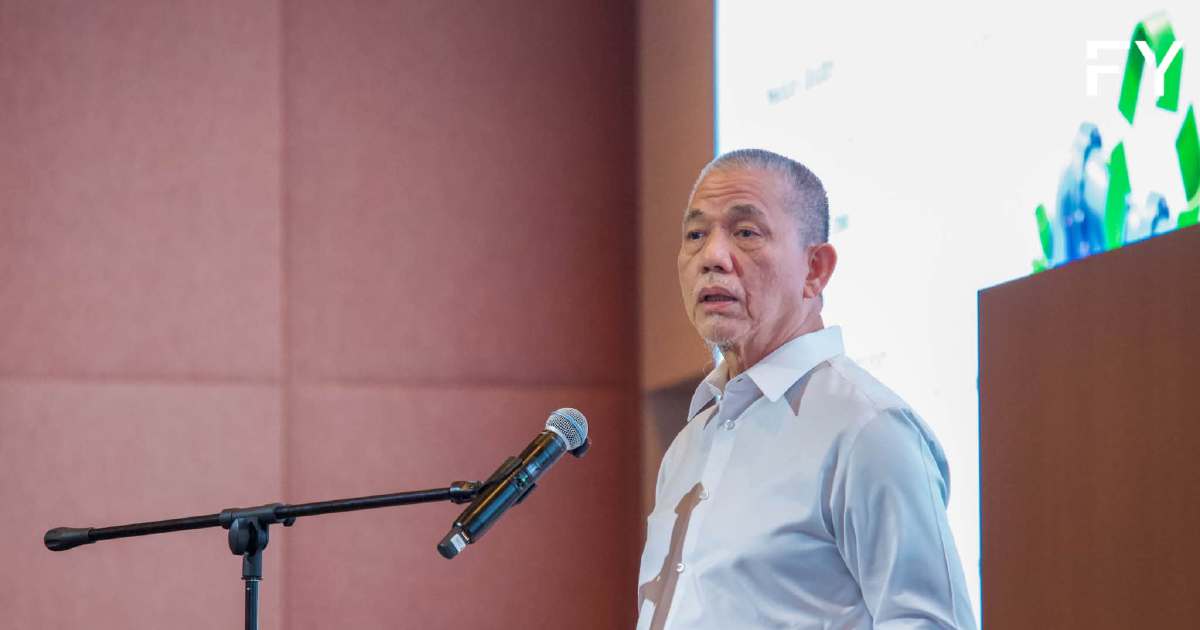
Fadillah says biogas, biosolid fertilisers and treated wastewater could turn sewage management into an economic opportunity while supporting water sustainability
KUALA LUMPUR: The sewerage sector has the potential to drive the country’s new circular economy through energy generation from biogas, the production of biosolid fertilisers, and the resupply of treated water to high-impact industries such as data centres.
Deputy Prime Minister Datuk Seri Fadillah Yusof said this approach not only optimises high-capacity sewage management but also has the potential to generate new revenue while supporting the nation’s water resource sustainability.
Fadillah, who is also the energy transition and water transformation (Petra) minister, said that so far, fertiliser products derived from sewage biosolids produced by Indah Water Konsortium (IWK) Sdn Bhd have obtained halal certification and are being used in the agricultural sector, including vegetable farming.
“So these are part of the efforts we are making so that this recycle economy will help increase revenue,” he said when speaking at the 2026 Petra Media Engagement Session here today.
Also present were Petra deputy secretary-general (water sector) Datuk Mohd Rodzwan Mohd Baba Sakri, Petra deputy secretary-general (energy sector) Datin Mareena Mahpudz, and Bernama news service deputy editor-in-chief Mohd Shukri Ishak.
Fadillah said under the 13th Malaysia Plan (RMK13), his ministry received an allocation totaling RM16.19 billion under the First Rolling Plan to implement overall water and sewerage sector development projects, including new and extension projects to enhance the technical capacity of the sector.
He noted that as of October 2024, the public sewerage asset portfolio managed by the Sewerage Services Department (JPP) is estimated to be worth RM22.69 billion, encompassing 7,618 sewage treatment plants, 1,443 pump stations, 24,024km of sewerage pipe networks, and 4,653 sewerage reserve land lots.
Commenting on the sector’s challenges, Fadillah said the main focus now is connecting old premises and residential areas that still rely on individual septic tanks to a centralised sewerage system to prevent the risk of waste overflowing into drainage systems and rivers.
“Right now we have many septic tanks. We want, if possible, for all these septic tanks to be connected to the central sewerage system. It is more effective.
“Otherwise, we have to go to every septic tank, and sometimes homeowners do not want their septic tanks cleaned. In the end, the overflow or excess water will flow into drains and ditches, and eventually end up in the river,” he said.
He said similar issues also involve houses of worship facing funding constraints for regular maintenance, prompting IWK to intensify corporate social responsibility (CSR) programmes to assist with the cleaning of sewerage systems at these premises.
Fadillah added that the government also faces challenges in rationalising and upgrading small-scale, outdated treatment plants that are no longer economical, alongside strengthening monitoring of effluent discharge standard compliance due to a limited number of enforcement officers.
Therefore, he said cooperation between the federal government, state governments, and local authorities must be strengthened in the planning and regulation of sewerage infrastructure to align with population growth and rapid industrial development.
At the same time, he called on media practitioners to continue playing the role of the government’s eyes and ears in raising public awareness regarding the importance of scheduled septic tank desludging and channeling immediate information if they detect odor pollution or treatment plant malfunctions on the ground.