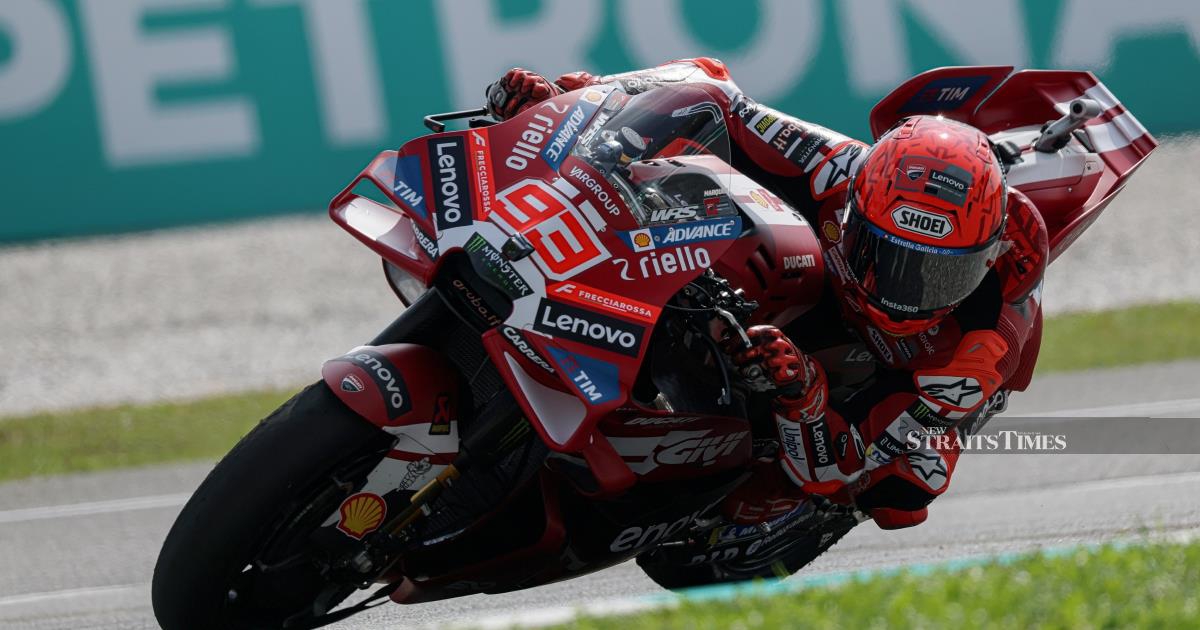

SEPANG: A clear team structure and an organised working culture have been key to Ducati’s MotoGP dominance alongside their Desmosedici GP machinery and riders, the Italian manufacturer said.
Ducati Corse MotoGP communications chief Artur Vilalta said clearly defined responsibilities and the way the team operate are behind their success.
He said racing success requires everyone to understand their role and work towards the same goal.
“Perhaps the way we work is one of the keys. It is not really a secret, but one of the main factors is the team structure.
“Everyone is in the right position and knows exactly what their role is,” he said in an exclusive interview here on Friday.
Vilalta said every member of the organisation has an important responsibility in ensuring Ducati maintain their performance at the highest level.
He said the leadership of Ducati Corse general manager Luigi ‘Gigi’ Dall’Igna gives the team an added advantage.
Dall’Igna’s extensive experience, working methods, and ability to manage riders provide motivation throughout the team, he said.
“Having an engineer like Gigi Dall’Igna is something special because his experience, the way he works and how he manages the riders also motivate everyone,” he said.
Under Dall’Igna, Ducati have developed one of MotoGP’s most competitive bikes while building cooperation between their factory and satellite teams.
That approach helped Ducati record six consecutive MotoGP constructors’ titles from 2020 to 2025, a record winning streak in the category.
Vilalta said sustaining that success requires constant improvements to both the motorcycle and the team’s working methods.
Ducati must keep challenging their own achievements alongside competing against rival manufacturers to stay ahead in technology and race performance, he said.
“The biggest challenge is maintaining our level of performance from year to year and season to season. We must constantly improve the motorcycle’s performance and the team’s workflow,” he said.
That challenge is expected to grow when MotoGP introduces new technical regulations in 2027, including reducing engine capacity from 1,000cc to 850cc.
Other changes include tighter aerodynamic restrictions, a ban on ride-height devices, fewer engines per rider, and the use of fully sustainable fuel.
The regulations will usher in a new phase of competition, requiring every manufacturer to develop new machinery and adapt their strategies.
For Ducati, Vilalta said the task goes beyond building a fast motorcycle, noting that the entire organisation must continue to improve and work effectively to maintain their position in MotoGP.