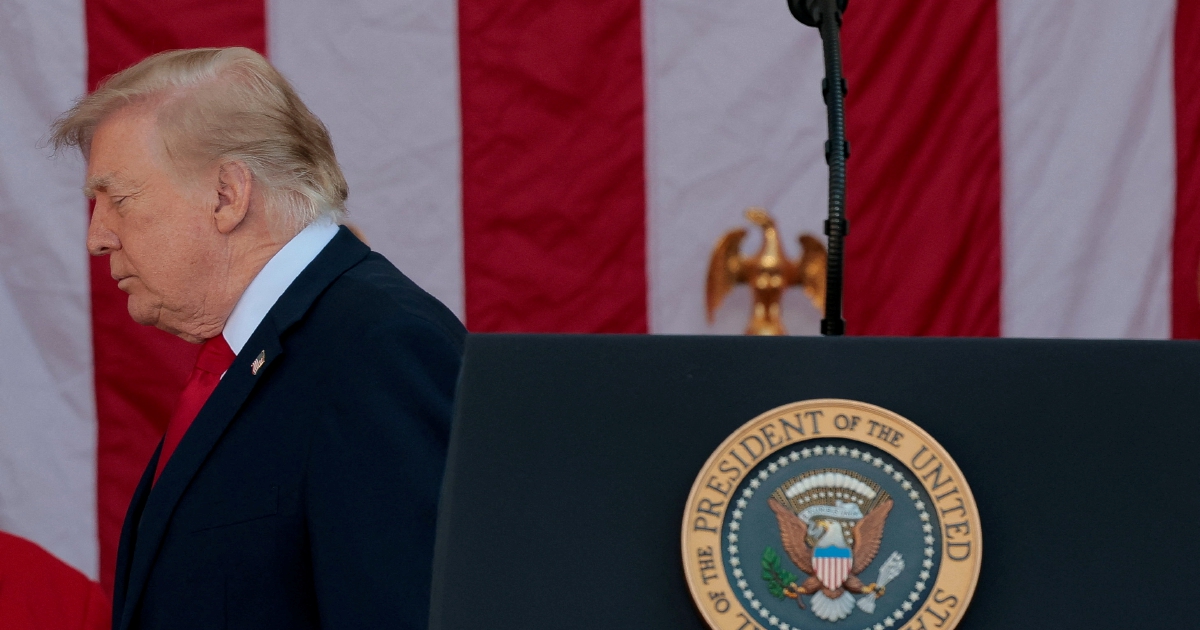

AS United States President Donald Trump weighs his next steps in the Iran war, Gulf energy producers have adapted to a no-war, no-peace reality that is making their operations more expensive and risky.
Even without renewed fullscale fighting, those additional costs could help put a floor under global oil prices.
The question is how long this uneasy equilibrium can last.
But the US military continues to build up forces in the Middle East. Mediation efforts led by Qatar and Pakistan also continue, though Washington and Teheran appear far apart on some of the thorniest issues, particularly Iran’s nuclear programme.
This suggests Trump’s current moratorium on major strikes may not signal an imminent end to the conflict.
It may instead be a tactical pause as Trump considers whether another round of air strikes can improve Washington’s hand in seeking a favourable deal to end a war now in its ninth month.
Low-intensity conflict is becoming the Middle East’s new normal even as the region’s crude exports recover.
Traffic through the Strait of Hormuz has averaged 10.5 million barrels per day (bpd) since the start of last month, according to Kpler.
While that is still below the prewar average of 13.5 million bpd, it is up substantially from the depths of the disruption.
Moreover, once alternative routes bypassing Hormuz are included, total average Gulf crude exports have risen to 16.7 million bpd since early last month, just shy of the pre-war level of 17 million bpd.
But this obscures an important distinction: the risk of another full-scale war has declined, but the cost of living with the existing conflict has not.
Iranian attacks on vessels transiting the Strait of Hormuz have become an almost daily occurrence.
The International Maritime Organisation tracked 131 confirmed incidents near the narrow waterway from the start of the war on Feb 28 through Nov 9.
The number rose sharply to 35 last month, the highest monthly total during the conflict.
The real figure is likely higher because shipowners often choose not to report incidents that cause little or no damage.
Gulf oil and liquefied natural gas exporters have responded by sending tankers through Hormuz in convoys, using narrow routes close to Oman’s coast under US Navy protection and conducting ship-to-ship transfers to limit the exposure of any one ship.
While this complex process is working, it comes at a high price.
Freight and insurance costs remain about 10 times pre-war levels.
Unless Washington and Teheran reach a durable agreement, there is little reason to expect those costs to disappear.
Gulf producers are normalising the exceptional. While the new normal highlights the extraordinary resilience of the Gulf oil industry, it also emphasises the weakness of today’s equilibrium.
For decades, a sustained disruption to shipping through Hormuz was treated as a remote but potentially catastrophic event.
Yet producers have shown that they can adapt with creative workarounds.
But adapting to a crisis is not the same as resolving it.
Iran has every incentive to continue attacking vessels crossing Hormuz. While the US blockade on Iran’s oil exports is choking its economy, the government shows no sign that it is willing to compromise on its red lines.
Teheran likely believes it can outlast Washington, particularly after the Republican Party’s drubbing last week.
That leaves Trump with an awkward choice.
The midterm elections sent a clear signal about the political cost of an unpopular war.
But is Washington willing to accept a deal that does little to curb Teheran’s nuclear programme, reinforcing the idea that the US lost the war?
If no tangible diplomatic progress is made in the coming weeks, Trump could still conclude that renewed strikes offer the best chance of strengthening the US hand in negotiations.
However, unless military action delivers a decisive blow that significantly weakens the Iranian government, another round of fighting could actually harden Teheran’s position and make a settlement more difficult.
The danger, therefore, is not simply another dramatic surge in oil prices caused by renewed war.
It is that the Middle East settles into something more durable and more insidious: a conflict intense enough to keep shipping dangerous, insurance expensive and energy infrastructure vulnerable, but contained enough for the world to learn to live with it.
The writer is from Reuters