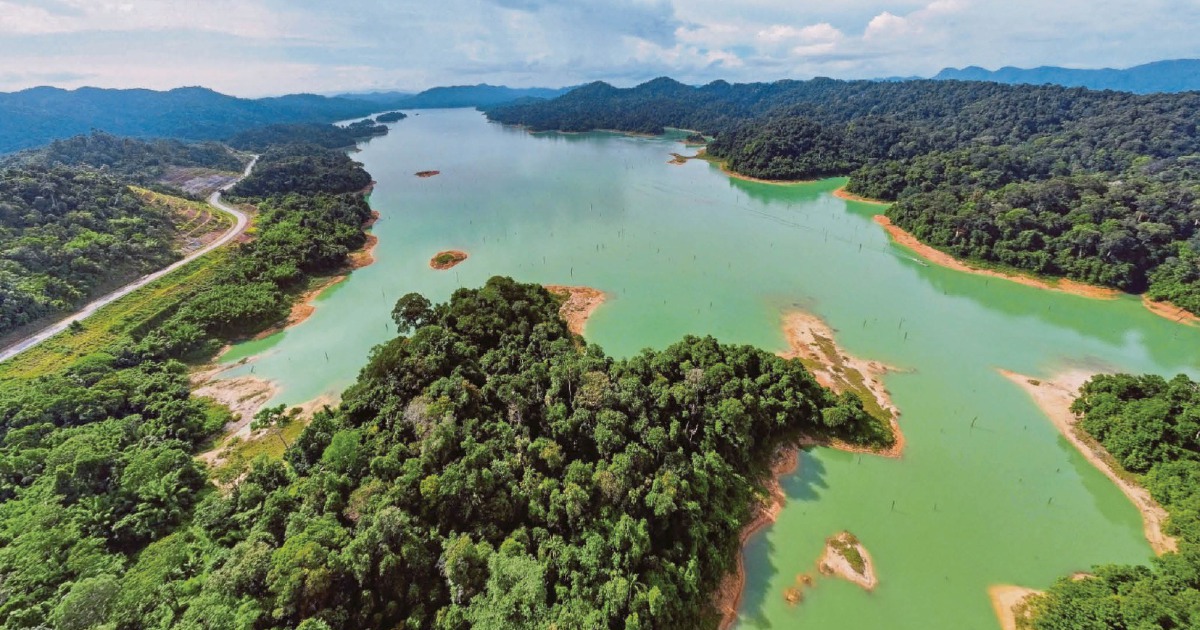

ALOR STAR: Some 56,000 padi farmers in Malaysia’s main rice-growing region face continued uncertainty over water supply as major dams struggle to recover from shortages that have persisted for much of the year.
Despite intermittent rainfall, reserves at the Pedu, Muda and Ahning dams remain depleted, raising concerns over the region’s ability to sustain padi cultivation.
Combined storage stood at 48.74 per cent on Nov 1, compared with 47.81 per cent on Feb 5 and 35.76 per cent on Sept 17.
Malaysian Padi Farmers Association (Pesawah) chairman Abdul Rashid Yob said he had never seen such prolonged water shortages in his more than 20 years as a padi farmer.
He said farmers had faced insufficient supplies throughout the year and warned that the shortage could delay the second planting season despite the schedule having been issued.
“At these water levels, Mada will not release water for the second planting season of 2026. We will have to depend on rainfall.
“It may still be raining in the northern region now, but rainfall could decrease in November or December, potentially bringing drought conditions,” he told the New Straits Times.
Rashid called for a dedicated task force to monitor dam levels and coordinate contingency measures.
“We cannot abandon padi cultivation as it is our staple food,” he said.
“We propose that the government establish a task force to discuss new approaches, whether tubewells or additional water catchment facilities, so that farmers can continue planting even during El Niño.”
He also said the authorities must inspect the dams for possible problems.
“Besides cloud seeding, attention must also be given to the condition of the dams, including repairs if there are leaks that could affect their water storage capacity,” he said.
The shortage has disrupted irrigation for months across nearly 100,000 hectares of padi land in Kedah and Perlis.
In March, when Muda Dam’s storage fell to 8.04 per cent, then Muda Agricultural Development Authority (Mada) chairman Datuk Dr Ismail Salleh warned that farmers might have to resort to dry direct seeding.
He also acknowledged that depleted reserves were forcing the agency to prioritise domestic consumption. He had said the dams require at least a combined capacity of 45 per cent before water can be released.
In a statement dated Oct 13, Mada said controlled releases between January and May had supported replanting for the second planting season of 2025 following floods.
During the same period, prolonged hot and dry weather had reduced rainfall in the Pedu catchment by nearly 30 per cent against the average, cutting inflows and depleting reserves.
To conserve supplies, Mada said farmers had been advised to use rainwater retained in their fields for the first planting season of 2026, without dam releases for padi irrigation.
“Water releases are carried out carefully, to meet domestic and industrial needs and maintain water levels in canals to reinforce their banks,” it said.
Mada said 117 recycling pumps remained operational to reuse water from drains and rivers, alongside measures to improve irrigation distribution.
It had also conducted a series of five cloud-seeding operations since February, with further operations approved over the Muda and Pedu catchments from Oct 12 to 15.
On supplies for the coming planting season, Mada said it understood farmers’ concerns and would continue monitoring dam levels and catchment conditions. Recovery would depend on rainfall.
“The adequacy of water supplies will continue to be assessed based on storage levels, inflows, weather developments and actual needs on the ground to support continued padi cultivation and national food security,” it said.