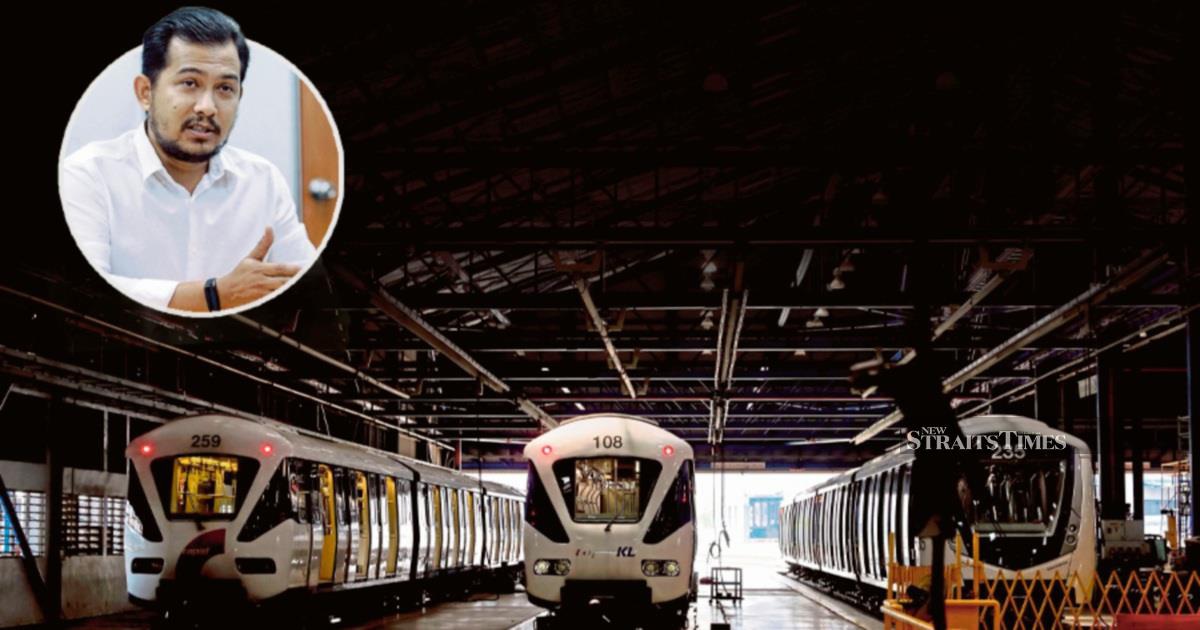

KUALA LUMPUR: Recurring disruptions on the Kelana Jaya LRT Line warrant closer scrutiny of its trains, signalling systems, track switches and power supply, experts said.
MY Mobility Vision founder and senior adviser Wan Agyl Wan Hassan said it was premature to conclude that every disruption pointed to a systemic problem, as technical faults could occur even in well-maintained systems.
However, he said the key question was whether recurring faults were being addressed effectively and whether corrective measures had prevented similar incidents.
“To establish whether there is a systemic issue, we need to examine recurring failure patterns, maintenance records, the condition of critical assets and service restoration times.
“We also need to know whether corrective actions taken after previous incidents have prevented similar failures,” he said.
Wan Agyl said the effectiveness of maintenance should not be measured solely by the amount of work completed, but by whether it reduced repeat failures, improved train availability and made services more reliable.
He said ageing trains and inadequate maintenance should not be regarded as the only possible causes, as newer trains could also experience technical problems.
“The more important question is whether the maintenance strategy reflects the condition and operating demands of the assets.
“This is why maintenance should increasingly be supported by condition monitoring, failure analysis and predictive maintenance, particularly for components with a history of recurring faults,” he said.
Wan Agyl called on rail operator Prasarana Malaysia Bhd to publish monthly reliability reports for each line, particularly the Kelana Jaya Line, so passengers could assess service performance.
He said the reports should include mean kilometres between failures (MKBF); the number, causes and duration of disruptions; the percentage of scheduled services operated; train frequency; and, the average time taken to restore normal services.
On Prasarana’s planned investment of more than RM3.4 billion to rehabilitate its rail services under Budget 2027, Wan Agyl said priority should be given to addressing recurring technical faults, strengthening maintenance capabilities and improving service recovery.
He said passengers should see improvements in incident response, service recovery and communication during disruptions within three to six months, provided immediate operational measures were implemented.
“We cannot expect a rail system to become completely free of technical faults.
“But we should expect the operator to become better at preventing recurring problems and managing disruptions when they happen,” he said.
Meanwhile, Universiti Putra Malaysia Road Safety Research Centre head Associate Professor Dr Law Teik Hua said Prasarana should consider commissioning independent technical audits to determine whether recurring disruptions were caused by isolated faults or underlying systemic problems.
He said the frequency of disruptions alone was insufficient to establish their causes, adding that comprehensive incident records and external technical assessments were necessary.
“Prasarana should disclose comprehensive disruption records and the findings of external technical audits to determine whether the incidents are isolated or point to wider systemic problems.
“The fundamental issue is understanding both the number and causes of disruptions and ensuring that preventive measures are taken to stop failures from recurring,” Law said.
Law also called for independent verification of Prasarana’s reliability figures to ensure that reported improvements reflected actual operating conditions.
He said monthly reports should include the number of train breakdowns per million train-kilometres, the average time taken to restore normal services, cancellation rates and punctuality levels.
He said public trust would improve when passengers saw that preventive maintenance was being carried out and was improving service reliability.
Law proposed targeted assessments, strategic interventions and greater investment in preventive and condition-based maintenance.
He also called for real-time equipment monitoring, systematic documentation of failures, sufficient stocks of spare parts and comprehensive response strategies, stressing that reliability programmes must focus on preventing failures rather than simply restoring services.