
KUALA LUMPUR: Malaysia’s sewerage sector faces mounting challenges from ageing treatment plants, gaps in connected services and rising demand in rapidly urbanising areas.
This requires more targeted infrastructure investment and stronger asset management, according to Deputy Prime Minister Datuk Seri Fadillah Yusof.
Fadillah, who is also the Energy Transition and Water Transformation Minister, said the government must ensure existing sewerage infrastructure is upgraded, rationalised or replaced where necessary to meet current and future demand.
He said the country has a substantial public sewerage asset portfolio, valued at RM22.69 billion as of October 2026.
This comprises 7,618 sewage treatment plants, 1,543 pumping stations, 24,024km of sewerage pipelines and 4,653 sewerage reserve land lots.
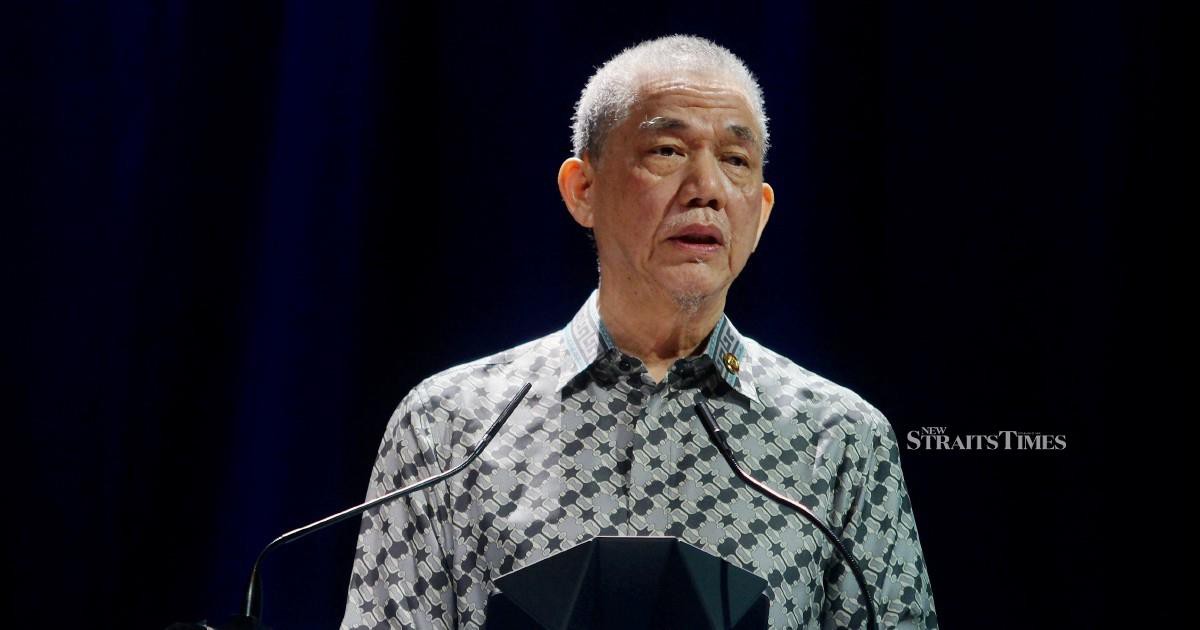
“These assets require clear planning, effective regulation, well-planned infrastructure and efficient operations and maintenance,” he said at the Energy Transition and Water Transformation Ministry’s 2026 media engagement session here today.
Fadillah said expanding connected sewerage services, particularly in densely populated and fast-growing urban centres, remains a key priority, alongside ensuring existing infrastructure has sufficient capacity to accommodate future demand.
Another pressing issue is the large number of ageing, small-scale or economically inefficient sewage treatment plants that need assessment for upgrading, replacement or rationalisation.
The government is targeting an increase in connected sewerage coverage across 13 major cities to 87.8 per cent, while rationalising 418 ageing and small-scale public sewage treatment plants into more modern regional systems.
Fadillah said the transformation also requires stronger monitoring of operational performance, compliance with effluent discharge standards and preventive maintenance to reduce the risk of system failures.
Under the 13th Malaysia Plan, the ministry has allocated a total project cost of RM16.19 billion under Rolling Plan 1 for sewerage infrastructure development.
However, he stressed that project planning must account for local conditions, population needs, existing system capacity, long-term operational requirements and financial sustainability.
Beyond infrastructure expansion, the government is also looking at turning treated wastewater into a valuable resource through reuse for suitable applications, as well as recovering biosolids and biogas to support the circular economy.
Fadillah said the sector’s transformation depends not only on infrastructure investment but also on improving technical capabilities, operational efficiency and long-term asset management.
Indah Water Konsortium (IWK), which operates and maintains more than 9,000 sewage treatment plants and pumping stations, as well as over 22,000km of sewerage pipelines nationwide, plays a critical role in ensuring service reliability.
Its initiatives include improving plant management, optimising energy consumption, strengthening treatment processes and meeting effluent standards through energy-efficient equipment, biogas and solar power.
Meanwhile, the Department of Sewerage Services (JPP), which plans and develops public sewerage infrastructure, was recognised as a Federal Technical Department effective July 7, 2026, enabling it to serve as the implementing agency for federal sewerage projects.
Fadillah said the respective roles of JPP, IWK and the National Water Services Commission (SPAN) must remain closely coordinated to ensure government investments translate into reliable and quality services.
The government also launched the Immovable Asset Management Procedures handbook for sewerage assets on Oct 5.
This collaboration involved the ministry, JPP, SPAN, IWK and the Public Works Department to strengthen governance of public sewerage assets.
He said sewerage infrastructure, although largely operating behind the scenes, is fundamental to public health, environmental cleanliness and the sustainability of water resources.
The ministry, through JPP and in collaboration with IWK, will organise National Sewerage Day 2026 from Nov 27 to 29 at IWK Eco Park in Pantai Dalam here, under the theme “Sustainable Sewerage, Prosperous Living”.